




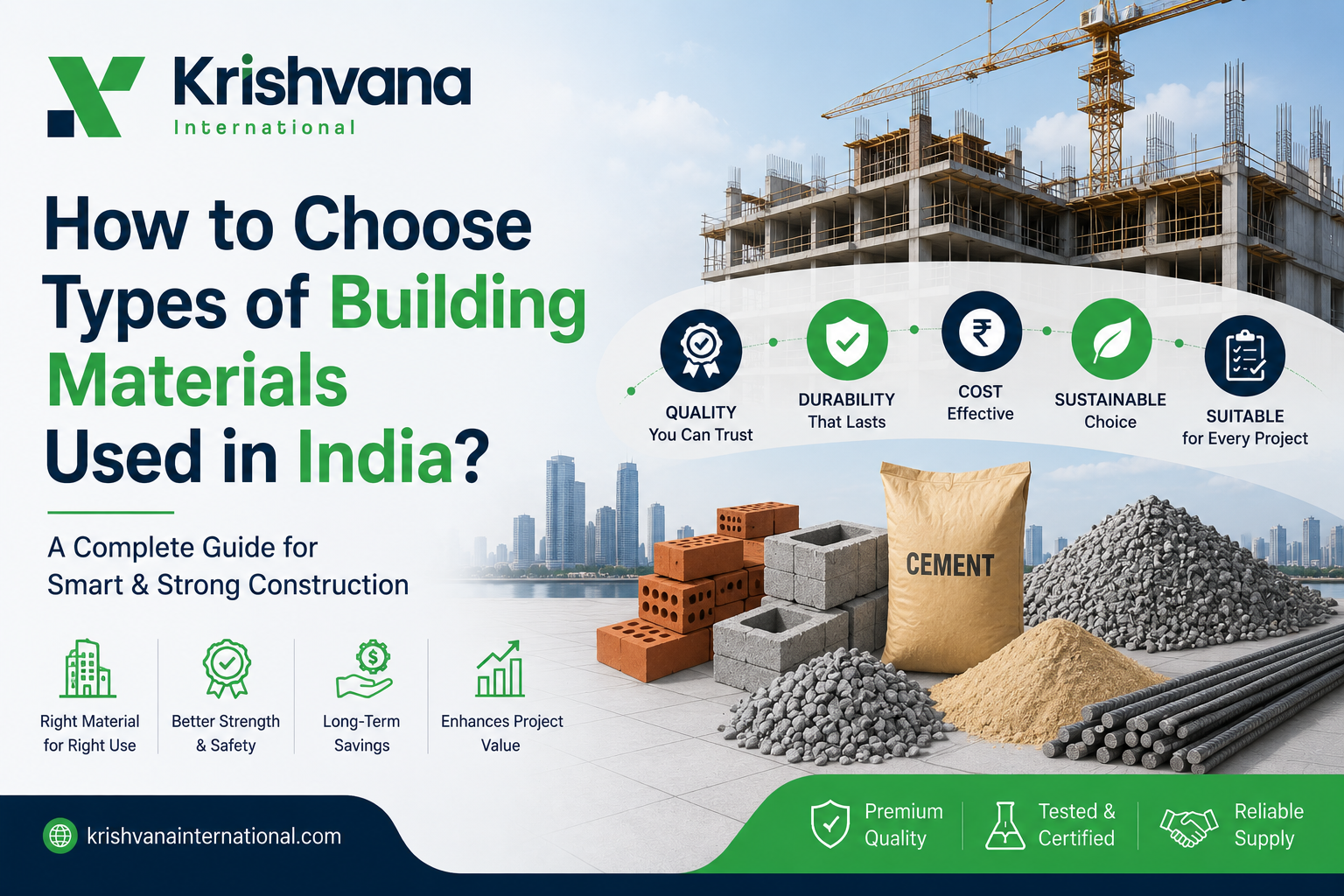
India’s construction industry is booming, from residential buildings to commercial buildings to factories and infrastructure projects. Choosing the right building materials when building a house in India is one of the most important decisions that must be made. The quality, durability, cost, and performance of materials directly affect the life expectancy of a structure.
The right products can help you save money, improve safety, and reduce future maintenance costs, regardless of whether you are building a house, warehouse, office, or industrial plant. Local manufacturers, suppliers, and the global business network in India provide a wide variety of options for sourcing quality materials.
This guide explains the most common building materials used in India and how to select the best one for your project.
Why Choosing the Right Building Material Matters?
Using the correct construction material offers many benefits:
- Strong structural performance
- Better weather resistance
- Lower maintenance cost
- Improved energy efficiency
- Long-term durability
- Faster construction timelines
- Better return on investment
In order to obtain reliable bulk materials, many developers now work with an Indian supplier or a trusted global supplier.
The Main Types of Building Materials Used in India
1. Cement
Cement is the foundation of most construction in India. The material is used for concrete, plastering, flooring, and structural work.
Best For:
- Homes
- Commercial buildings
- Roads
- Bridges
How to Choose:
- Check the grade and brand reputation
- Ensure fresh stock
- Buy from trusted suppliers
2. Steel
Among other uses for steel, it can be found in reinforcement, framing, roofing structures, and industrial buildings.
Benefits:
- High tensile strength
- Long life
- Earthquake resistance
- Fast installation
A number of contractors source large projects through international trade and the bulk import-export business to achieve cost advantages.
3. Bricks and Blocks
Bricks remain one of the most common building materials used in India. It is also common to use AAC blocks and fly ash bricks.
Options Include:
- Red clay bricks
- Fly ash bricks
- AAC blocks
- Blocks of concrete
How to Choose:
- Check strength
- Water absorption rate
- Uniform in size and finish
Modern energy-efficient buildings benefit from the use of AAC blocks.
4. Sand and Aggregates
The use of sand, gravel, and crushed stone is essential for the construction of concrete.
Best for Use:
- RCC work
- Plastering
- Flooring base
- Roadwork
Select building materials that are clean and properly sorted at all times.
5. Tiles and Stones
Flooring, walls, and decor are made of tiles, granite, marble, and natural stones.
With a growing demand in worldwide trade markets, India is a major global supplier of ceramic and stone materials.
Popular Choices:
- Vitrified tiles
- Ceramic tiles
- Granite
- Marble
- Sandstone
6. Wood and Plywood
Doors, windows, furniture, and interiors are constructed from wood.
How to Choose:
- Moisture resistance
- Termite treatment
- Grade quality
- Thickness requirement
Engineered wood products are now preferred in many modern projects.
7. Glass
The use of glass in offices, malls, homes, and modern architecture has become widespread.
Types:
- Toughened glass
- Laminated glass
- Reflective glass
- Decorative glass
It is important to choose a product based on its safety, insulation, and design requirements.
8. Painting and Finishing
It is important to paint surfaces to protect them and improve their appearance.
Common Uses:
- Exterior weather coating
- Interior wall finish
- Waterproof coatings
- Industrial coatings
Use premium paint for longer durability.
9. Refractory Materials
A refractory material is essential for industrial facilities that are exposed to high temperatures, such as factories, boilers, and furnaces. The products are designed to withstand extreme temperatures and are heat-resistant.
Popular keywords in industrial construction include:
- Ceramic refractory materials
- Engineered refractory materials
- High-performance refractory materials
- Refractory materials used in furnaces
- Boiler refractory material
- Refractory lining materials
- Refractory bed material
Best for Use:
- Boilers
- Furnaces
- Kilns
- Steel plants
- Power plants
- Cement plants
How to Choose Refractory Products?
- Temperature resistance
- Abrasion resistance
- Chemical compatibility
- Installation method
- Trusted Refractory Bed Material Supplier in India
A number of industrial buyers compare Refractory Bed item prices, Refractory Bed Material specifications, and sourcing options before making a purchase decision.
What Are the Most Used Building Materials in India?
Cement, steel, bricks, sand, aggregates, tiles, wood, glass, and refractory products are the most common building materials. Materials should be selected according to the type of project, the budget, and the durability requirements.
How to Choose the Right Building Materials
1. Understand Project Type
A residential house requires different building materials from a warehouse, hotel, or factory.
For example,
- Homes: bricks, cement, tiles
- Commercial: steel, glass, premium finishes
- Industrial: refractory supplies, steel, concrete
2. Check Quality Standards
Never buy only on price. Poor-quality materials lead to repair costs later.
Always verify:
- Certifications
- Grade standards
- Brand reputation
- Test reports
3. Compare Cost vs Value
Cheap products may fail early. Instead of focusing only on the purchase price, consider the lifecycle value.
4. Consider Climate Conditions
India has a varied climate. The type of material required for coastal, humid, rainy, and hot regions varies.
Examples:
- Waterproof paint for monsoon zones
- Heat-resistant roofing in hot areas
- Corrosion-resistant steel near coastlines
5. Buy from Trusted Suppliers
Quality, delivery, and consistency are ensured when you work with reliable suppliers.
Many builders source through:
- Local distributors
- Manufacturers
- Bulk dealers
- Import export company networks
- Verified global business suppliers
Common Mistakes to Avoid
- Choose only low-priced materials
- Ignoring quality testing
- Wrong material for the climate
- Buy from unverified suppliers
- No warranty or specification checks
- Delayed procurement planning
Why is India Strong in Building Materials Supply?
As a result of the following factors, India is becoming a major supplier of construction and industrial products:
- Strong manufacturing sector
- Competitive prices
- Large product variety
- Skilled workforce
- Export-ready supply chains
- Growing import and export services network
Due to this, India has become a trusted hub for international exports and the sourcing of building materials.
Tips for Fast and Smart Procurement
Use Bulk Planning
Purchasing in bulk reduces costs and prevents delays.
Compare Multiple Vendors
Get quotations from at least 3 suppliers.
Ask for Samples
Especially tiles, steel, paint, and refractory materials.
Verify Delivery Timelines
Construction is delayed due to late materials.
Conclusion
Understanding the types of building materials used in India and how to select them can save considerable time and money on any project. The right selection of materials ensures strength, safety, and long-term performance, from cement and steel to tiles and refractory materials.
Whether you are building a home, an office, or an industrial facility, you should always focus on quality, suitability, and trustworthy suppliers. As a global supplier of construction products, India continues to provide buyers with reliable sourcing solutions locally and abroad.
