




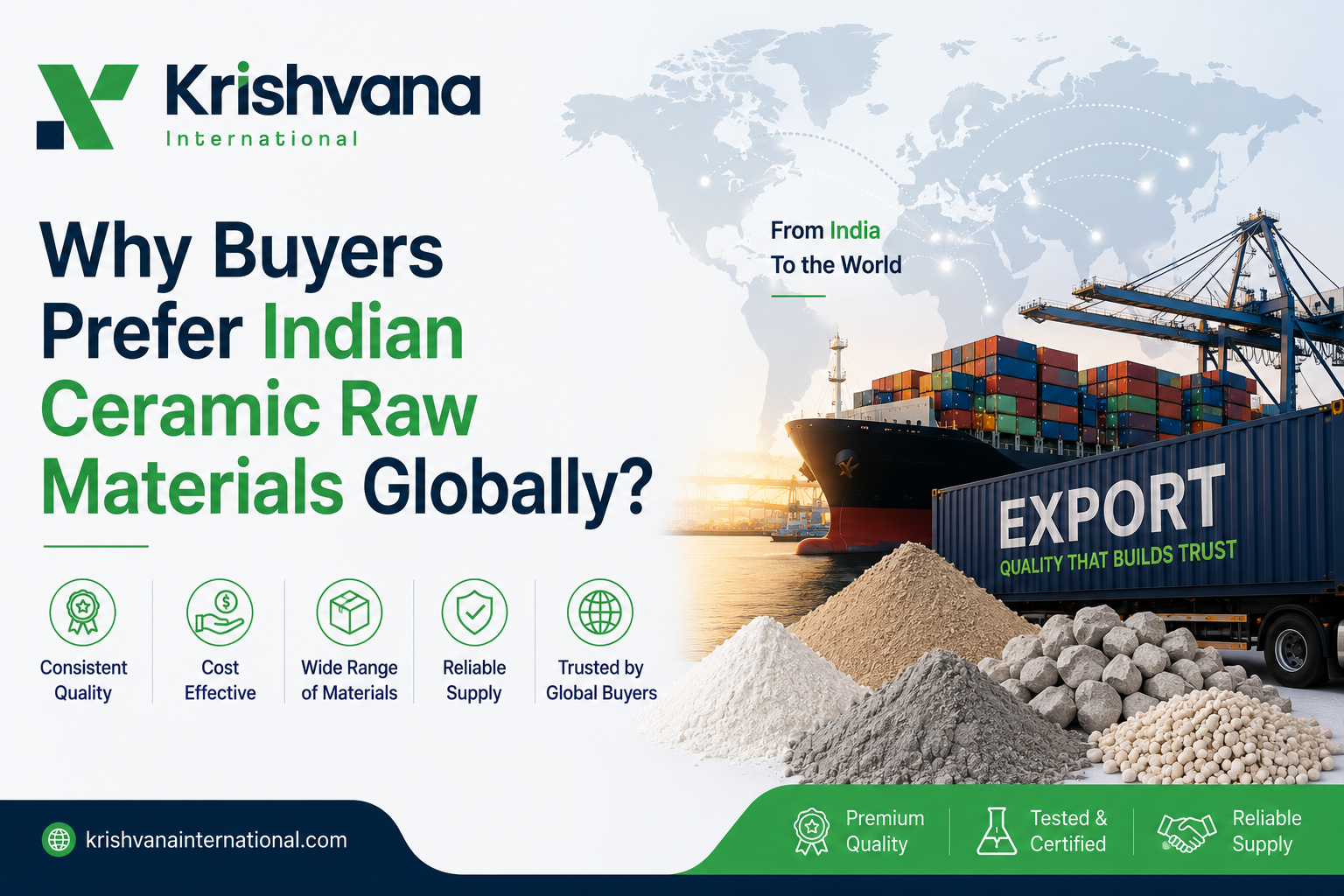
Modern global trade has led to industries around the globe constantly searching for reliable, high-quality, and cost-efficient sources of raw materials. The Indian market has become a dominant source of premium ceramic raw materials for international markets among all global sourcing destinations.
From large-scale tile manufacturers to specialized industrial ceramic producers, global buyers are increasingly relying on India. Due to its strong foundation in the import and export business, as well as its extensive mineral resources, the country has become a trusted global supplier of minerals.
But what makes India stand out in the competitive international trade landscape? Let’s explore in depth.
India’s Strategic Position in Global Trade
In the import and export industry, especially in industrial minerals and minerals, India has become a major player. The country’s consistent record of exporting products from India has strengthened its reputation on the international stage.
Buyers across Europe, the Middle East, Africa, and Asia prefer Indian suppliers due to:
- Capacity for reliable bulk supply
- A competitive pricing structure
- Strong logistics and shipping networks
- Established reputation in global business
Search trends clearly show rising demand for Indian suppliers, mineral exports, and export or import products, proving India’s growing influence on global markets.
Diverse Range of Minerals Raw Materials
As one of India’s strongest advantages, it offers a wide variety of mineral raw materials, which are essential to various ceramic applications.
Key Materials Exported from India:
- Kaolin mineral
Kaolin is a mineral with fine particle sizes and a very high degree of whiteness, making it crucial for improving mineral strength and finish. - Feldspar in ceramics
Acts as a flux that lowers melting temperatures and enhances mineral product durability. - Quartz ceramics
Structural and thermal properties are provided. - Calcium carbonate in ceramics
Improves surface smoothness and product stability.
This wide product range allows international buyers to simplify procurement processes within their import and export business, reducing costs and increasing efficiency.
Cost Advantage That Drives Global Demand
One of the primary reasons why buyers prefer India is the unmatched cost advantage. Indian suppliers can offer mineral raw materials at the best price in India due to:
- Abundant natural minerals availability
- Lower labor and operational costs
- Efficient mining and processing technologies
For global buyers operating in competitive industries, sourcing from India helps maintain profit margins without compromising quality.
Ceramic minerals are therefore considered among the best export products from India.
Quality Assurance and International Standards
International export markets place a high value on quality. Exporters from India are aware of this and maintain strict quality standards.
Quality Practices Followed:
- Advanced mineral processing and refinement
- Chemical and physical testing in certified labs
- Compliance with international export standards
- Consistent batch quality for bulk orders
By taking these measures, buyers will receive advanced minerals materials that are suitable for industries such as tiles, sanitaryware, refractories, and electronics.
Strong Export Infrastructure & Logistics
It is India’s well-developed import and export services infrastructure that has contributed to its success on the global stage.
Key Strengths:
- Major ports like Mundra, Kandla, and Nhava Sheva
- Efficient container handling and shipping systems
- Streamlined export documentation
- Global shipping connectivity
By doing so, businesses involved in import or export business, whether online or offline, can source materials without delays or complications.
World-Class Ceramics Manufacturing Ecosystem
India is home to one of the largest mineral manufacturing clusters in the world, especially in Gujarat (Morbi).
Benefits of This Ecosystem:
- High production capacity
- Continuous innovation in advanced mineral like lime stone
- Skilled labor and technical expertise
- Availability of raw materials near production units
This ecosystem makes India a one-stop destination for buyers searching for industrial minerals in ceramics.
Trusted supplier relationships
A key factor in global business is trust. Exporters from India establish long-term relationships with international customers.
What Buyers Appreciate:
- Transparent pricing and communication
- Consistent product quality
- On-time delivery commitments
- Flexibility in bulk orders
Many established import and export companies in India focus on customer satisfaction, which strengthens buyer confidence.
Focus on Sustainability and Eco-Friendly Practices
Sustainability is becoming a major factor in global trade decisions. Indian manufacturers adopt:
- Eco-friendly mining processes
- Waste reduction systems
- Energy-efficient production methods
International buyers find Indian suppliers more attractive because they adhere to global environmental standards.
Market Trends and Rising Global Demand
According to industry trends and keyword insights:
- The demand for mineral raw materials is steadily increasing
- Mineral exports and Indian suppliers are in high demand
- The export and import of products by global buyers
This indicates that India’s role in the mineral raw material industry will continue to expand.
Step-by-Step Guide: How to Import Ceramic Raw Materials from India?
For businesses new to sourcing from India, here is a simple guide:
Step 1: Identify a Reliable Supplier
Looking for a trusted Indian supplier with experience in exporting
Step 2: Verify the Product Quality
Check the certifications and request samples.
Step 3: Negotiate pricing
Discuss bulk pricing and shipping options.
Step 4: Complete Documentation
Manage invoices, packing lists, and export paperwork.
Step 5: Arrange Logistics
Choose shipping mode (sea or air) based on urgency.
Step 6: Customs Clearance
You must complete the import formalities in your country.
This structured approach ensures smooth import and export transactions.
Industries That Depend on Indian Ceramic Raw Materials
Indian ceramic minerals are used across multiple industries globally:
- Tile and sanitaryware manufacturing
- Refractory and furnace industries
- Glass and the electronics industries
- Construction and building materials
This wide applicability further increases demand in the international trade market.
Conclusion
Indian ceramic raw materials have established themselves as a global leader. The combination of affordability, quality, and reliability makes it the first choice of buyers around the world.
Indian exports continue to attract international buyers due to its strong presence within the global trade ecosystem.
For businesses aiming to succeed in the international export market, sourcing ceramic raw materials from India is not just beneficial; it is a strategic advantage for long-term growth.
FAQ’s
1. Why are Indian ceramic raw materials preferred by global buyers?
Indian ceramic raw materials are preferred for their cost-effectiveness, consistent quality, and reliable supply, making them ideal for international manufacturing.
2. Which ceramic minerals are commonly exported from India?
In ceramics, Kaolin minerals, Feldspar minerals, and Quartz minerals are the most commonly exported minerals. The minerals are widely used in the production of tiles, sanitaryware, and industrial products.
3. Is India a reliable supplier to the global ceramic industry?
Due to its strong export infrastructure, experienced import-export companies, and long-term business reliability, India is regarded as a trusted global supplier.
4. Are Indian ceramic raw materials suitable for industrial applications?
Absolutely, Indian materials meet international quality standards and are widely used in industries like construction, refractories, ceramics manufacturing, and advanced applications.
5. How can international buyers import ceramic raw materials from India?
Buyers can connect with verified Indian suppliers, request samples, finalize pricing, and complete documentation to smoothly manage the import and export business process.
6. What makes Indian ceramic raw materials cost-effective?
India’s abundant mineral reserves, low labor costs, and efficient processing systems help suppliers to offer minerals raw materials at the best prices in India without compromising quality.
7. Which industries use ceramic raw materials from India?
Indian ceramic minerals are heavily used in the manufacturing of tile, sanitary ware, refractories, glass, and construction materials.
8. Is quality testing done before exporting ceramic materials to India?
To meet global standards, most exporters follow strict quality control processes, including lab testing, certification, and inspection.
9. Why is India growing rapidly in ceramic exports?
Ceramic exports have grown significantly due to India’s strong position in international trade, its advanced manufacturing ecosystem, and rising global demand.
10. What should buyers check before choosing an Indian supplier?
Buyers should evaluate product quality, certifications, export experience, pricing transparency, and delivery reliability before selecting a supplier.
